Blogs
Ash Wednesday
Posted Wed, 03/05/2025 - 14:22 by James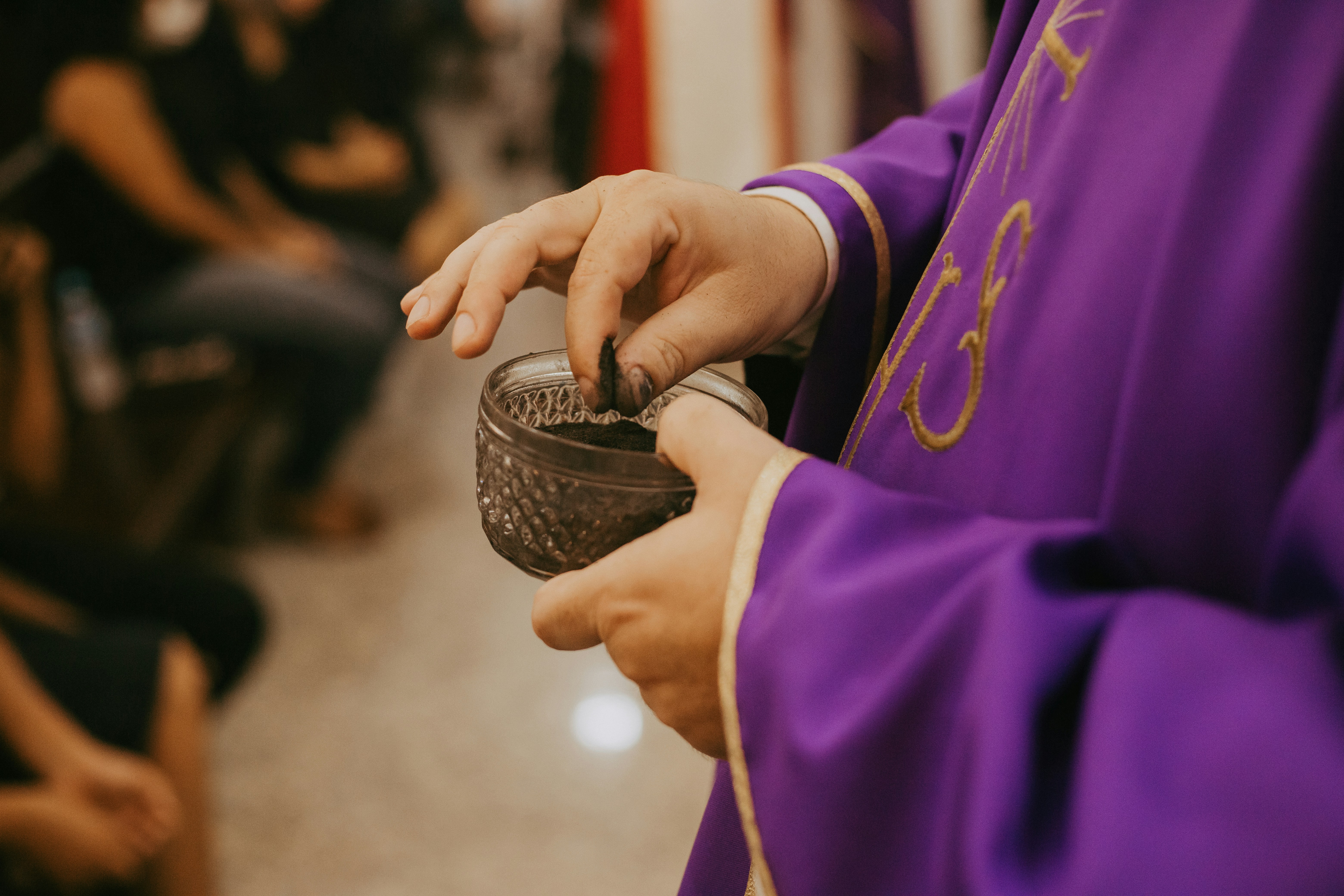
By James Holland
During Lockdown, whilst the world learnt to bake, I took up a rather more niche hobby – rosary making.
Around this time, a friend of mine noted that she often meditates on the phrase memento mori. Literally, the phrase means “remember to die”, but many use this phrase as an opportunity to ponder death and mortality.
At the time, she was looking at memento mori rosaries. These similarly niche religious articles have aided the prayers of Catholics for centuries, helping them to, in the light of Christ, remember their own mortality.
And so, I made her a memento mori rosary as a wedding present – it is a rosary she uses every day. Now, I agree – it’s an odd gift. But as a Catholic, she knows that a remembrance of death can lead us to a renewed focus on life.
This year, Ash Wednesday falls on Wednesday 5th March. It marks the beginning of Lent, a 40-day period of prayer and penance in preparation for the resurrection of Christ at Easter.
We hear in the Gospels that the Spirit led Christ Himself out into the desert, where he fasted for 40 days and nights.
Moreover, we hear in Genesis that the flood lasted for 40 days and 40 nights, in Exodus that Moses spent 40 days on Mount Sinai, and in Numbers that the Israelites wandered for 40 years in the desert before reaching the Promised Land.
The number 40 symbolises a period of transformation through adversity. For Christians today, the 40 days of Lent represent a time of preparation, and God-willing, transformation, before the new life of Easter.
With this in mind, Ash Wednesday is not simply a day to remember that we will die, but also an opportunity to embrace the fulness of life.
Traditionally, the ashes used during Ash Wednesday services are created by burning the palms used in the previous year’s Palm Sunday liturgies.
These ashes are mixed with blessed water or oil, and are often spread, in the shape of a cross, on a person’s forehead.
There is no requirement to keep the ashes on all day (nor is there a prize for the person who keeps them on the longest), but Ash Wednesday provides Christians with a unique opportunity to wear the instrument of our redemption, the Cross, marked out in the fragility of ash, a public acknowledgement of our own mortality and need for God.
As I write this blog, the Holy Father, Pope Francis, is seriously ill in hospital. And whilst we pray for his recovery and an alleviation of his pain, Catholics are not naïve to the fact that one day, like us all, he will die.
Death is not a failure of life, but a passing into, God-willing, the loving embrace of the Father. When we contemplate mortality in this life, so too do we contemplate the life that is to come.
This year, my Ash Wednesday will look a little different. I’ll be speaking about fasting in the Christian faith at an interfaith iftar, alongside Jewish and Muslim friends. As a Christian working in the interfaith field, this seems like the perfect fasting crossover.
The religious unity that fasting practices can bring reminds me of the opening chapter of the Catholic Church’s Declaration on Non-Christian Religions, Nostra Aetate, a document that is now in its 60th year: “One is the community of all peoples, one their origin, for God made the whole human race to live over the face of the earth. One also is their final goal, God” (1965, §1).
Ash Wednesday draws our minds to our final goal, a longing for the day that we may hear the words: “Well done, good and faithful servant” (Matthew 25:23). This Lent, may we remember the unitive power of death, and when these 40 days are over, may we rise with renewed strength to remember the unitive power of life.
James Holland is the Coordinator of Westminster Interfaith for the Roman Catholic Diocese of Westminster and the Inter-Religious Advisor at St Mary's University. James is also a Mentor for CCJ's Campus Leadership Programme.