Blogs
Advent Reflections: A Conversation with Prof. Mary C. Boys
Posted Tue, 12/19/2023 - 09:45 by Lazzaro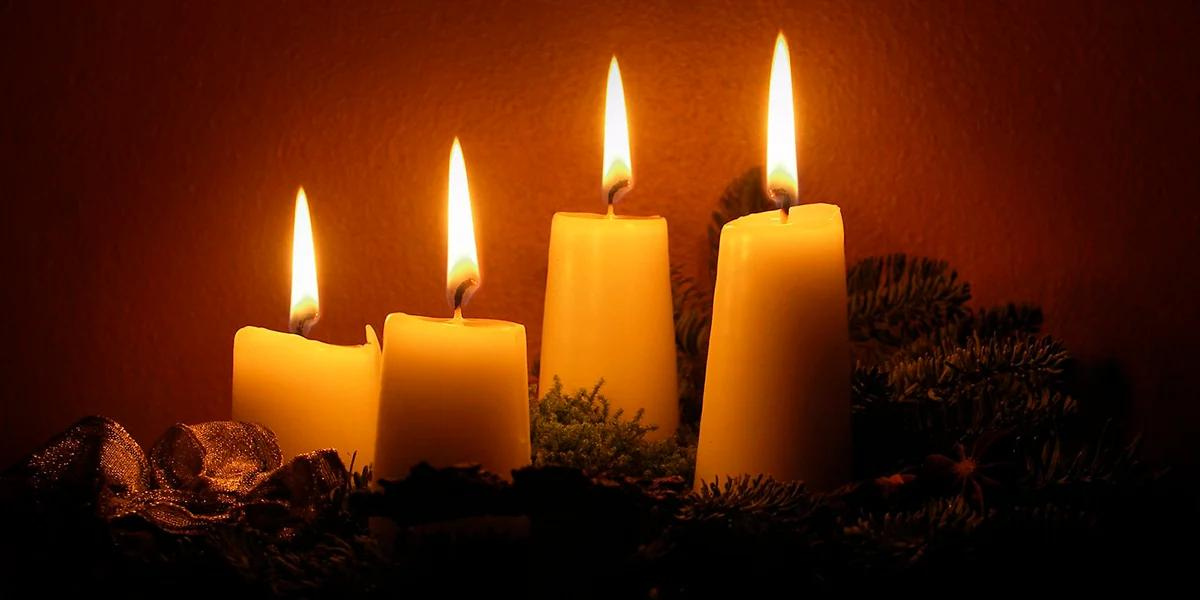
To reflect on Advent, and its meaning for Jewish-Christian relations, our Senior Programme Manager James Roberts had a long conversation with Prof. Mary Boys, Skinner & McAlpin Professor of Practical Theology at the Union Theological Seminary in the City of New York.
Please tell us about your faith tradition and your work:
I teach at an historically Christian school, Union Theological Seminary in the City of New York, founded in 1836 in the Presbyterian tradition. Gradually becoming an ecumenical institution, in the past ten years or so Union has an interreligious faculty and a religiously diverse student body.
I am a lifelong practicing Roman Catholic, and also a vowed member of a women’s religious community, the Sisters of the Holy Names. This feisty band of women inspires and sustains me, particularly in the very patriarchal religious tradition of Roman Catholicism. It has given me other ways of articulating prayer and enacting ritual—not in ways counter to the official liturgy, but in modes that articulate women’s concerns and voices, as well as a larger world. I realised that all my life I have been praying formal liturgical prayers written by men. Men need not dominate the articulation of our religious language!
So, I have the particularly of my own Catholic Christian tradition and my engagement with other religious traditions. While I really value our Islamic and Buddhist colleagues, it’s the Jewish colleagues at Union and especially beyond it with whom I have enjoyed rich and meaningful collaboration.
Why is the Christian-Jewish relationship important?
For me, as a Christian, it is absolutely vital, because I cannot understand Christianity without understanding Jesus as a Jew, or his earliest disciples as Jews. The relationship is vital to understand our Scriptures, and our genesis in Jesus’ movement. It’s also key to facing the shadow side of church history.
It is important to understand that the very closeness of our traditions (at least from a Christian point of view) has meant that there have been tensions. There has been collaboration and cooperation, but conflict has been dominant—and with tragic results. Originally, that conflict happened over theological matters, but then over the centuries (particularly after the 4th century) it began to develop in dangerous directions, hardening into binary opposition in which Jews were regarded as enemies. So, as a Christian, it’s not only a matter of understanding the genesis of Christianity, but also a matter of grappling with ‘Christianity’s original sin’, where Christianity situates itself over and against Judaism as a living community.
What is Advent and why is it important for Christians?
I am deeply shaped by liturgy, and Advent is my favourite liturgical season. In the Northern hemisphere you can see how our religious traditions and liturgical seasons are shaped by where we are vis-à-vis the Equator. Lent means Spring and the Easter alleluias are even more resonant with the coming of Spring. And now in December, when darkness comes early and lingers long into the morning, it’s a time of waiting, watchfulness, and longing. It is this longing for a world in which “the wolf shall live with the lamb/the leopard shall lie down with the kid” (Isaiah 11: 6) that speaks so profoundly to the human condition.
The theme of Advent is really two-fold, but it is usually flattened to be just one. On the one hand, it is a time of preparation for Christmas. There’s this notion of light in the darkness; a theme that transcends any religious tradition. Christians are thinking about how is it that we prepare ourselves to celebrate the way in which Jesus Christ comes into the world in an embodied fashion. What does that mean to us? What does that ask us to do?
The other theme of Advent, which I think is much harder to articulate, is this notion of the ‘time to come’. Sometimes we talk about the ‘second coming’ of Jesus. We do not know what might happen at this time of fulfilment, but it is promised and we live in hope for the time when God might be “all in all.”
In the Catholic Church, the Gospel reading for the first Sunday in Advent ends with the word ‘watch’. But Advent is not just about watching and waiting. It is also about longing, longing for the world to be different, to be a world where all God’s creation flourishes. This is what messianic hope was in Israel; a hope for a world that is going to be different from the one we have, not because God is going to come in and just settle everything, but because we are entrusted by God to be partners in creation and re-creation. This season is a way of preparing ourselves to think about what involvement we should have in the world, to make this world closer to the world God has created it to be, and thus for the flourishing of all.
I think it would be helpful if those who preach inspired in their hearers a longing for a world of peace and justice and a commitment to assume our own roles in working toward it. It seems all the more important now in the face of extremely depressing issues in the world, with the wars in Ukraine, in Gaza with Hamas and Israel, and in various African nations to give way to desolation and throw up our hands in despair. Advent preaching should encourage us to live in hope by accepting God’s offer of partnership in restoring creation.
Advent typically overlaps with the 8 days of Channukah. Although each is distinct, they share in common a ritual of lighting of candles at this darkest time of year as symbols of hope and divine presence. A few years ago, the first night of Channukah overlapped with the first Sunday in Advent. As I was lighting my advent wreath, I thought of Jewish friends lighting their Chanukiah that night. It seemed to me that we are together in this notion of light in the darkness, and letting that powerful symbol speak to us.
What is the impact of the advent of Christ on the covenant with the Jewish people?
Clearly, Jesus came as a Jew. I think that reality does not impact us as much as it could or should. Jesus is a Jew, so when I pray to God through Jesus, he is to me, as a Christian, always ‘other’. He is the one in whom I see the image of the living God, who remained a Jew. So, my tradition is inextricably linked to the Jewish people who are also covenanted with our God.
Many Christians have a negative perception of the ‘Old Testament’. But it is not ‘old’ to Jews – it is a living Scripture. Nor is it obsolete for us just because we have Jesus. We cannot understand how the Gospels present Jesus unless we understand that they have internalised certain texts of the Jewish scriptures (even if the canon of Jewish Scripture had not been formalised yet). The poetry of Isaiah influences how the Gospels present Jesus as a prophet. So, we understand Jesus in light of how he is shaped by his central aspects of his Jewish tradition and how the Jewish tradition shaped the writers of the Gospel, who are not Christians. Christianity emerges in the course of several centuries in relation to the emergence of rabbinic Judaism.
What advice would you give to any homilists during the Advent/Christmas season with regards to Christian-Jewish relations?
In my experience, I find that most preachers hardly touch the Old Testament text, no matter how beautiful it is. I think that Advent is a time to just preach on the powerful poetry of Isaiah,
inspiring people to just sit with the poetry and the promises of God. Much of the latter part of Isaiah is written for a people coming out of exile. So, advent is a time of longing and waiting, but also of hope.
When those who preach make a claim about Judaism (which they often do) it should be accurate. In my experience, their claims are often oversimplified or inaccurate. In the last 60 + years, there has been a revolution theologically and biblically in understanding the relation of Christianity and Judaism, and it is the responsibility of pastors to familiarize themselves with important resources that reveal so many new understandings. Two in particular would make splendid Christmas gifts: the second editions of ‘The Jewish Study Bible’ and ‘The Jewish Annotated New Testament’,
There are many fine commentaries on biblical interpretation that can be used to avoid things that are gross over-simplifications. I’ve often heard preaching that claims that Jews before the time of Jesus were waiting for a political Messiah, but then God sent Jesus as a spiritual Messiah to forgive sins, and to save the world. This overstates and oversimplifies messianic expectation in Second Temple Judaism. Related to this is the notion that ‘Jesus came to ‘rescue’ Israel that was ‘waiting in lonely exile,’ as in the lyrics of the beloved hymn ‘O Come, O Come Emmanuel’. The music of this hymn speaks to my soul—but the lyrics distort the history.
How can preachers speak about prophecy during Advent in a way which is positive for Christian Jewish relations?
Prophecy was much more directed toward how the people lived in their time. Isaiah was not writing about Jesus, but we can see how early Christians were looking back at the writings of Isaiah or Jeremiah, for example, and seeing in them what they had witnessed Jesus say and do, and the significance of Jesus for them. So, it was a retrospective reading for the early followers of Christ. But Jews also had that same tradition of retrospective reading. Rabbis reread texts of their scriptures and saw how those texts spoke to issues for the Jewish community in their time.
I have just been working on a mid-2nd Century text from Justin Martyr called the ‘Dialogue with Trypho.’ It’s more a disputation than a dialogue, with Justin Martyr telling Trypho, a Jew, that Christians read Jewish scriptures more truly than Jews do, because Christians read them with a spiritual lens. Justin Martyr cites all kinds of messianic prophecies to support this. Trypho responds by saying that Jews can read these texts as fulfilled in their communities as well. So, the argument centers on whose reading of texts is the ‘true’ one. That’s an argument that has continued over the generations. Today we see far more collaboration among biblical scholars, Jewish and Christian.
I think what we need to be able to realise is that we have two peoples—followers of Christ and Jews--who read Israel’s scriptures through different lenses. Where I think we stand together with Jews this season, which is something I think preachers could emphasise, is that the messianic longings are longings for a world of peace and justice where people sit at the heavenly banquet in which fine food and fine wine are served – it is a vision of creation being restored and renewed, and dry bones being given life. Yes, we read them through the lens of Jesus, the mashiach, the Christos in Greek. Yes, we call him ‘messiah’, but this does not mean he brought about the messianic age. Jesus has come, our Christos, our anointed one, our messiah, but he has not brought the messianic age, which is still to come.
So, I think we can stand with Jews. Yes, we read the text through different lenses, but what is it that we both want? It’s the messianic age, where all are in God’s embrace. Isaiah 2:1-4 has a beautiful vision of that – of all the peoples going up to the mountain, up to Mount Zion. Our longing is for the messianic age, but not just that God is going to make it magically appear.
Beyond this season of Advent, what is the future for Christian-Jewish relations?
From my standpoint living close to numerous university and seminary campuses, and reading news events in the US, we Christians seem to lack awareness of the theological antisemitism that developed in the early church, especially after the 4th c. CE. When we want to pronounce on Israel right now in terms of the war with Hamas, we need to be mindful of our own complicity in antisemitism. Christians have no high moral ground on which to stand. That being said, we mourn all those lost in this tragic war, and call for a peace with justice both for Israelis and Palestinians. . Antisemitism is also a first cousin to Islamophobia. Those two are related to Christian nationalism, which has now become a world phenomenon. We have a lot of work to do looking at ourselves.
I would say that the positive thing on our agenda is to immerse ourselves in the richness of what has happened in biblical and theological scholarship in the last 60 years. One of the things that happened recently that gives me great hope is that the Vatican hosted a symposium on the Pharisees that had Jewish and Christian scholars (and scholars, presumably, not attached to any particular faith). There is a book which has come out of that conference simply called ‘The Pharisees’, edited by Amy-Jill Levine and Joseph Sievers. Now, it is not an easy read for people who are not in the academic world, but it does present a far more textured perspective on the Pharisees, whom preachers so often present so negatively. I have heard so many sermons about the terrible Pharisees, and it is important to realise that there is an obligation to learn about the Pharisees as they really were, rather than in the more polemical way in which they are depicted in the Gospels. So that’s a Lenten project right there for preachers! There are loads of resources – not just the more technical book which has just come out, but many good articles and books.