Blogs
Students, Situations, and Unknown Spaces – Current Reflections on Campus Life
Posted Fri, 04/05/2024 - 08:57 by James
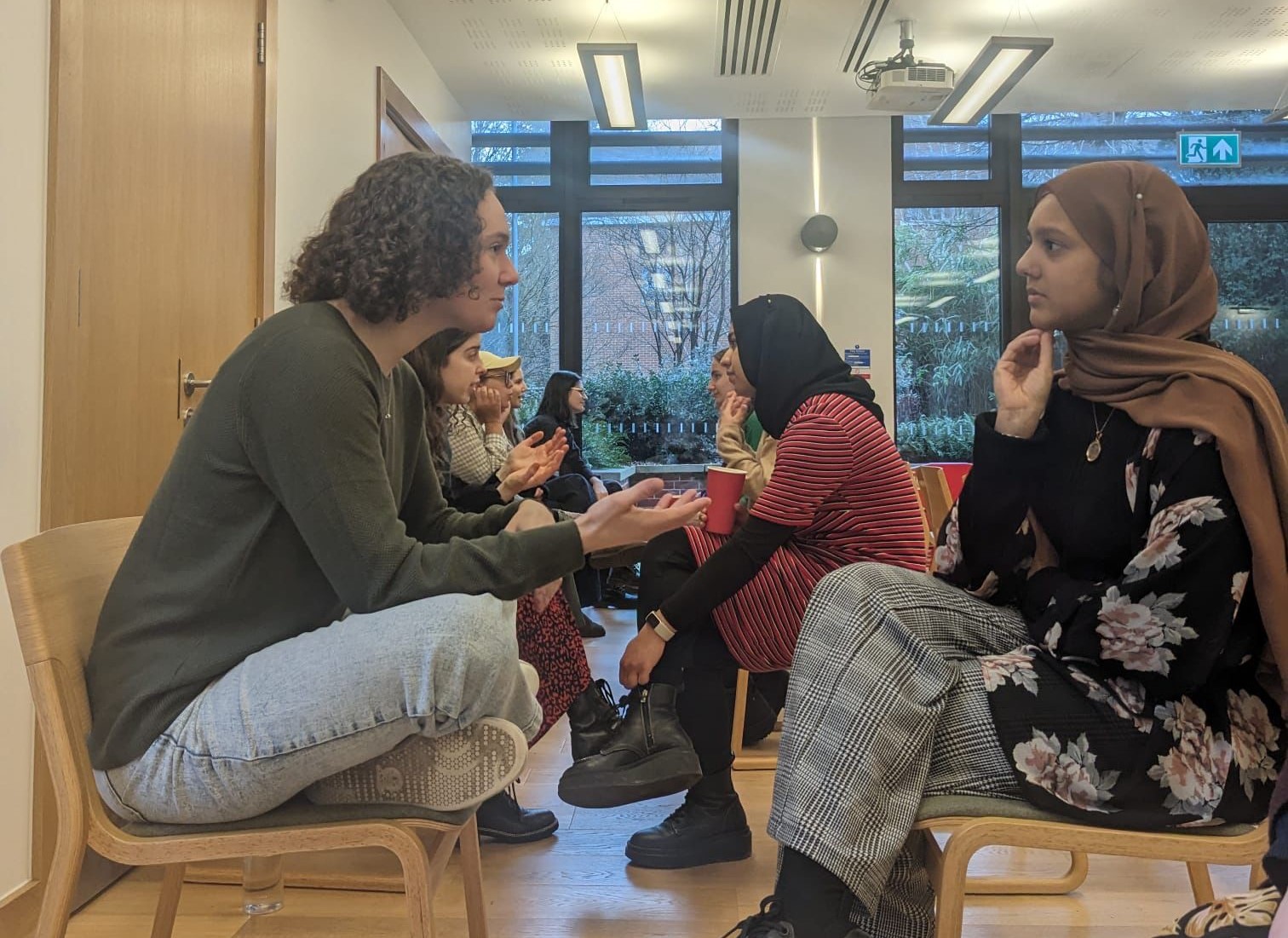
In light of the increase in tensions on university campuses across the country, Beth Williams reflects on the importance of brave interfaith spaces and the vital work that CCJ’s Campus Leadership Programme is doing in this area.
Unknown situations. This is a phrase that has stuck with me recently. There’s a discomfort to it, the fear of the unknown, this idea of uncertainty, an uneasiness about it almost. It is the phrase or sentiment that has continually appeared when listening to Jewish students, staff, and colleagues as of late.
Why do I start with this image? For many on campus this is a continued feeling or question, what about the unknown situations? It is a small insight into the experience of many students at present.
Since October 7th we have seen an unprecedented rise in antisemitic and Islamophobic incidents on campus. A normal academic year would see on average around 60 antisemitic incidents recorded whereas 2023 saw three times this with 182 being recorded on or after October 7th (CST).
There is a distinct shift on campuses. Places and spaces that once were comfortable are no longer. I ask this question, what does this cause?
Tension.
Campuses can somewhat seem to be at the epicentre of tensions, with incidents, protest, marches, and vigils. The tension is visible.
For some, this may be startling and uncomfortable. For others this is not news. University campuses are often seen as hotspots or places of tension, specifically when flashpoints in the Middle East occur. For students, university is maybe the first time they are away from their homes and their support systems. It also might be the first time they have a newfound freedom of expression, ideas, and identity; a first taste of independence. Yet this also can cause polarity. This is a fraction of what campus life feels like at present.
Polarising.
The continued stretching of polarity placing students automatically on different ‘sides’ with no space for nuance or dialogue. There’s a tight pulling away between spaces that feels uncomfortable, and few are making the tentative steps between. For many students, trust has been broken and relationships that once were strong are now fragmented.
As a result of this polarization fear has become a common denominator among the experience of many students at present, specifically Jewish students. In our antisemitism briefing recently, Emily Sinclair from the Union of Jewish Students (UJS) spoke of some of the challenges Jewish students have been facing on campuses across the country. Each campus is unique, and the experience and needs are different, but she highlighted how “the Jewish community is small; an incident of a brick being thrown at a window in Glasgow is heard about in Gloucestershire”. We see this idea of unknown situations reappear and how it’s affecting students nationwide.
She continued to highlight how “Interfaith forums on campuses have all but collapsed, any bridges that can be built in that space would be phenomenal whether this is through shared meals, conversations or talks, now is definitely the right time to be celebrating our similarities and I suppose more importantly discussing our differences”.
This is something we are seeking to address through communication, engagement and fostering understanding in our Campus Leadership Programme.
Through these changes and challenges we are seeking to rebuild and continue interfaith forums on campus. For many students, particularly Jewish students, trust has been broken. Relationships that were once strong are now fragmented. While yes, we have seen bridges and trust broken, we’ve also seen students rise up to the occasion and continue to promote dialogue, compassion, and understanding.
It is encouraging to see our campus leaders continue to host interfaith events and provide opportunities for relationship building in the midst of difficult circumstances and situations on campus. Our Christian campus leaders have shown their increased sensitivity to this recognition of relationships on campus being strained and, in many cases, trust being broken.
We’ve seen them work to grapple with how to be present and have empathy but not being able to fully understand the experience some of their friends, peers and fellow campus leaders are having. Throughout this process of empathy, learning, understanding, and responding, they are still wanting to be involved in open dialogue. We’ve seen many students approaching spaces with heightened sensitivity to listen to students from different backgrounds and to create warm brave interfaith spaces. (We use the word ‘brave’ rather than ‘safe’ as not every space may feel safe to every person, but everyone has the opportunity to be brave in entering and being in a space.)
Our Christian campus leaders have shown how to have action but sensitivity at the same time. They have been proactive in helping foster community dialogue spaces and interfaith events and have been key in continuing to build relationships amidst the tensions on campus particularly since October 7th.
Something I have noticed amongst students is there is a longing for people to engage with interfaith work yet the tensions on campus are making people somewhat more tentative. Part of this is that students are worried that conversations will be centred around the conflict in Israel/Palestine and they’ll be questioned on their thoughts of what’s happening in Gaza. It is important to note here that each university or campus is unique and the experience, need, and engagement varies greatly.
Within this tentativeness, one way we try to manage the fear of unknown situations is by using ground rules for interfaith events. Specifically, within our dialogue and event spaces (both campus managers and students) we have seen the importance of how we frame a space. Our ground rules are a set of statements and conditions co-created by the campus managers and edited by cohorts of student leaders which help students to frame spaces and keep them brave for people. They include ideas such as only speaking from your own perspective and giving the space to highlight if any topics are off the table for that particular event. We understand situations may be unknown, but ground rules have helped us ask the question of how can we make those unknown situations more accessible and manageable?
The practicality of it is that this isn’t always easy, yet there’s something in doing and putting in the work to build bridges and foster understanding among students.
While much of this looks somewhat bleak and uncomfortable we were encouraged that two of our Leeds campus leader alumni currently on their year abroad and year of industry shared their responses with us after the antisemitic incident of Leeds Hillel House being defaced by antisemitic graffiti. Even though they are away from their community they still wanted to share with us the importance of interfaith dialogue and meaningful relationships and how people can and should come together to create welcoming and inclusive spaces. Raquel shared on the importance of interfaith discussion, communication and understanding “the recent rise in antisemitic incidents on campuses across the country has been horrific to witness, and it requires us to unite as one now more than ever. That is why interfaith discussion, communication and understanding is of the utmost importance in this current moment”.
To finish, I leave you with Noah’s thought on interfaith and mutual compassion. These may be difficult times on campus but through interfaith, forums, and programmes such as the campus leadership programme we can see this compassion, dialogue and understanding continue to unfold.
“at a time when communal relations have been threatened by such violent political crossfire, it is more important than ever to foster interfaith dialogue. Only with mutual compassion and understanding will we be able to live in harmony alongside each other – interfaith initiatives are a key forum in which this understanding can be achieved.”